About Me
Those restless nights filled with anxiety and worry, the fears of the future and the regrets of the past, the storm of dark thoughts swirling in your mind — yeah, I've been there.
As a society, we've been taught to lock grief up in a box and hide it under our beds. We think of grief as a moment in time, a sadness that will pass given enough time and mourning. But I believe grief is one of the most profound and complicated emotions; it encompasses a longing, a loss, a love, a heartbreak, denial, joy, fear, relief, anxiety, and desperation.
Grief uproots our lives as we know them, and they will never be the same. I don't believe that's a pessimistic view — I believe it's the truth of grief. And that's why grief hurts so much. The life we had lived, learned to cope within, function within, thrive in — it's gone. Even if that isn't such a bad thing, as with the loss of a job we may have hated, we still built a life and identity within that role, and suddenly it's gone.
Grief can come in an incredible number of forms. The loss of a loved one, of course, or the loss of someone we had a complicated relationship with. It can come from the loss of a romantic relationship, a job, a move, a pet, children growing up, someone getting sick, a bad haircut (no, really).
In the span of two years, I lost my two remaining grandparents, whom I had grown much closer to as they aged. In the midst of losing the first, my father was diagnosed with cancer, and after months of battling, we lost him too. I left my relationship and my home, leaving behind friends and a community, to move closer to my remaining family as we dealt with my father's declining state and the grief my mother felt — losing both of her parents as her husband grew weaker.
Life as I had known it — the life I had fought for, built independently after going through a divorce in my late 20s, a life I was proud of — was gone.
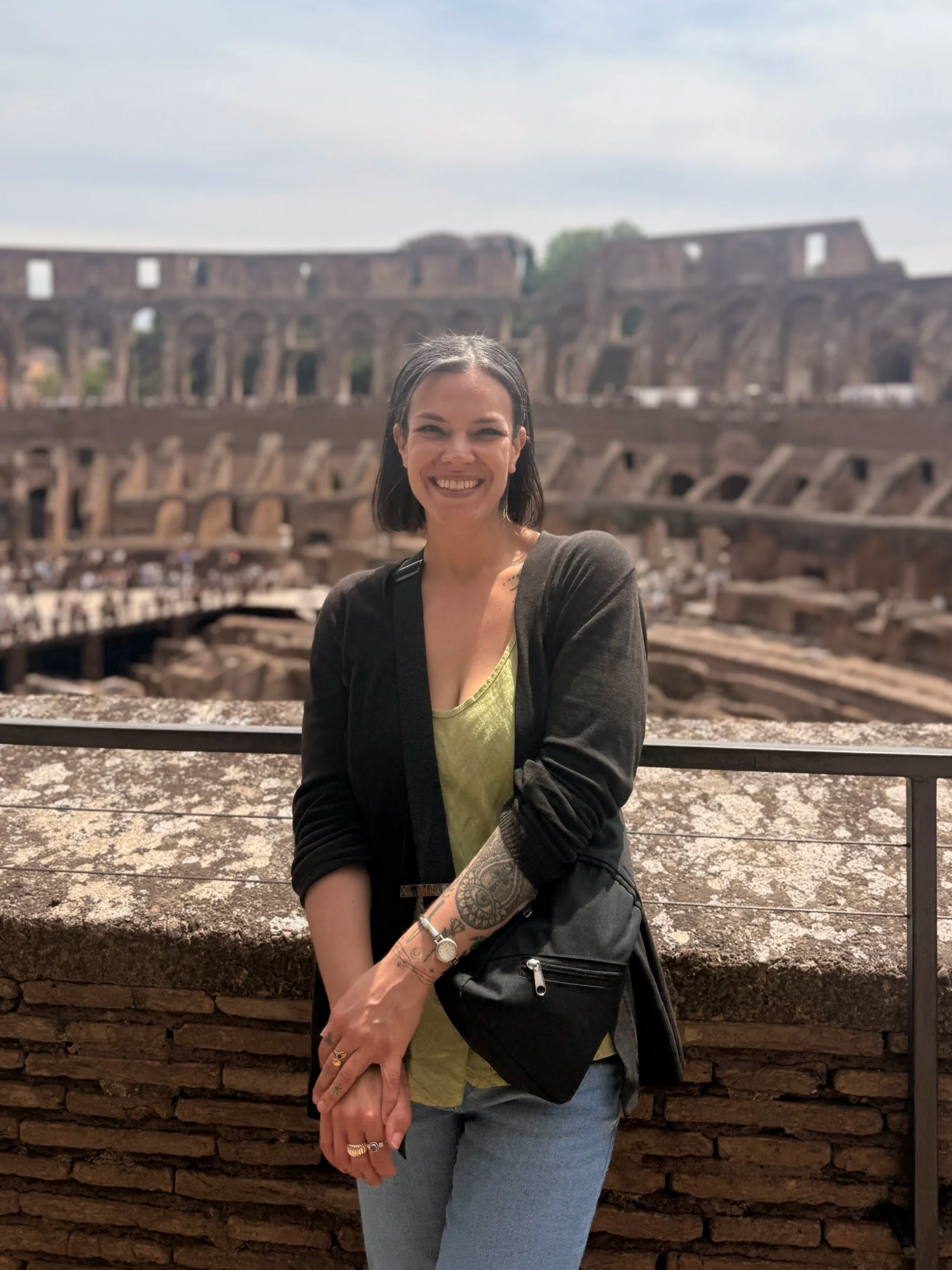
Rebuilding seems impossible when you've lost your foundation. And maybe "rebuilding" isn't the right word to use when we talk about moving forward in grief. We can't rebuild as if the loss hadn't happened, sweeping away the ruins and putting up shiny new columns to cover the rubble. Maybe we should look at our past the way the Romans look at theirs. Modern Rome has built an entire city around the ruins of its past — not shying away from it or trying to cover it up, but also not limiting itself to just the identity of what came before.
If we can learn to love the ruins, find grace and gratitude in how far we've come through that phase of our life, while learning how to build another beautiful life around our pain, then I think we can find peace.
This is an ongoing process. I know how hard it is to be frozen by grief, but I learned to trust myself again and reclaim my peace and strength to move forward. Now I'm dedicated to helping others find their footing after loss — because I know firsthand that grief rarely comes just once, and rarely comes alone.
Let's build around our ruins, together.