

My Coaching Approach

Coaching style
My approach to coaching is rooted in the International Coaching Federation's definition: "partnering with clients in a thought-provoking and creative process that inspires them to maximize their personal and professional potential." This means that no one knows your grief, your journey, your fears, and your strength like you do.
Through mindfulness practices and holistic techniques, we will work together to help you process your loss and find a clear path forward — one that honors what you've been through while helping you rebuild a life around it. Let's embark on this journey together and build a life that feels grounded, authentic, and truly your own.
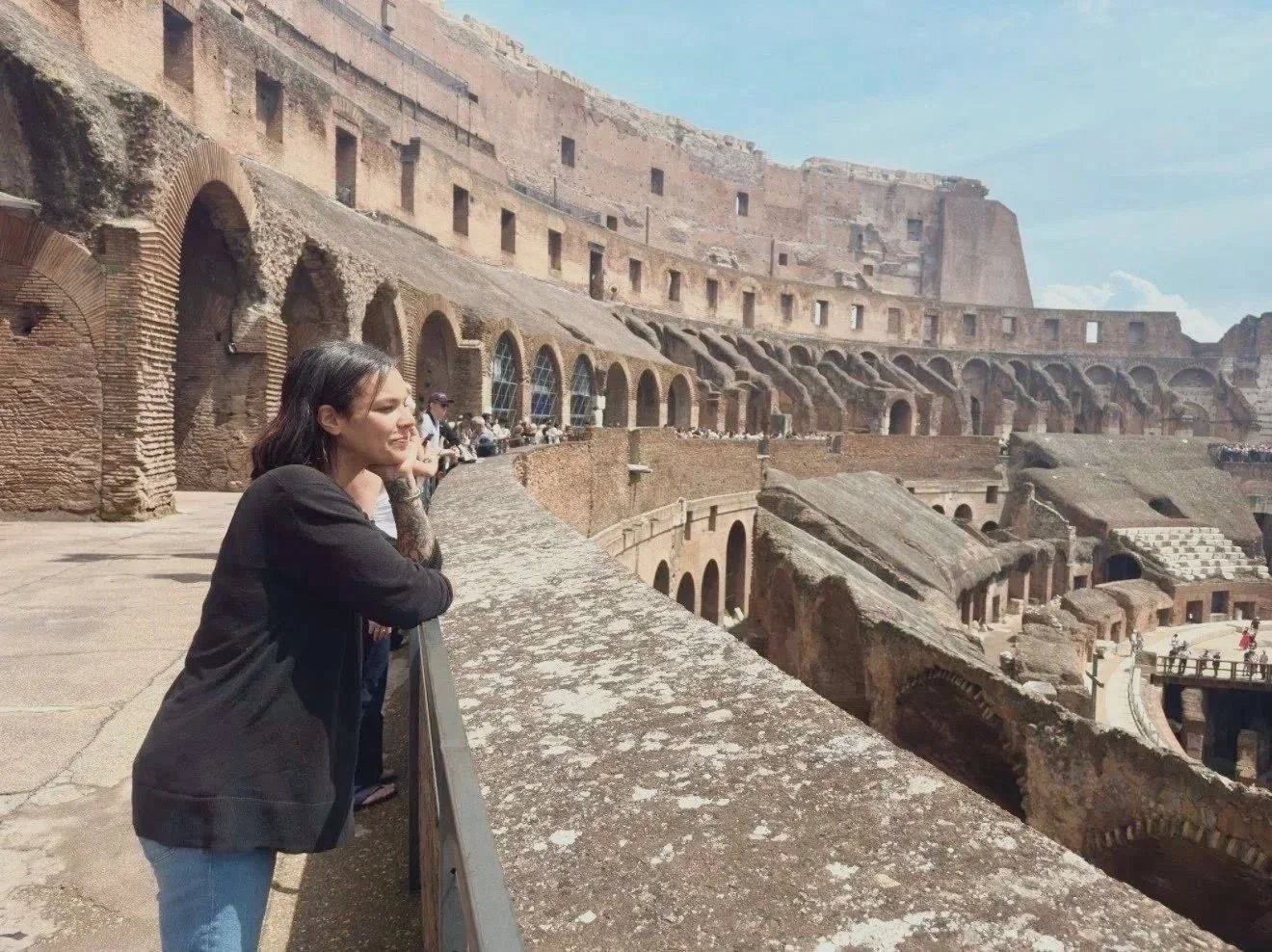
Building Around Your Ruins
When we lose someone or something central to our lives, the instinct is often to "get back to normal" — to rebuild exactly what was there before, as if we could sweep away the wreckage and put up shiny new columns to hide it. But grief doesn't work that way. What's gone is gone, and pretending otherwise only delays the harder, more honest work of healing.
I think about this the way modern Rome relates to its own history. The city wasn't rebuilt by clearing away its ruins — it was built around them. Ancient columns stand beside modern apartments. A 2,000-year-old temple shares a piazza with a café. Rome didn't erase its past to become a thriving, modern city, and it didn't stay frozen in it either. It integrated the ruins into its identity, and grew a new city around them.
That's the approach I bring to coaching. We won't work to "get over" your loss or rush toward closure. Instead, we'll work together to:
Acknowledge the ruins. Before we can build anything new, we have to be honest about what's actually there — what was lost, what changed, and what it means that things will never look the way they used to.
Find what's still standing. Loss rarely takes everything. Part of our work is identifying the parts of you — your values, your strengths, your relationships — that remained through the change, even if they look different now.
Build with intention, not urgency. There's no timeline for this. We'll move at a pace that honors where you actually are, not where you think you're supposed to be.
Integrate, rather than erase. The goal isn't to return to who you were before, or to pretend the loss didn't happen. It's to become someone whose life includes the ruins — someone who carries the past forward without being confined by it.
Grow into something new. Just as Rome is still, today, a living and evolving city — not a museum — the life you build after loss can be full, dynamic, and genuinely yours. Different from before, but no less whole.
This isn't a linear process, and it isn't one you have to navigate alone. Together, we'll find the tools and the pace that work for you, so you can build a life around your ruins — one that honors what came before while making room for what's still possible.